News, Updates and Other Minutiae
August 2019
Website outage - I made some hosting changes and there was a minor hiccup. Hopefully everything is now back to normal but please let me know if anything is missing.
The start of a new project added in the Homebrew category. Specifically, a Frequency Dependant Switch. Measures the incoming frequency and switches 1 of 8 outputs on. Software for this project uploaded.
June 2019
Added another project for the AD9850 DDS modules. A Simple DDS sweeper in the Homebrew section. This is an absolutely basic, no frills project using a 12F1840 to sweep a DDS module between a range of frequencies. Plenty of scope for you to improve on the software and add extra features.
Privacy Policy uploaded. It may be viewed at the Privacy Policy link in the footer.
Custom code/webhost costs
I have, for quite a while, provided modified versions of the code for my projects free of charge. However, the cost of webhosting for this site has tripled in the last few of years and shows no signs of getting any cheaper.
As of October 2017, I will be asking for a donation in exchange for providing custom modified code for my projects to help keep this site available.
GPDR and all that stuff
In accordance with various bits of legislation around the world, either currently in force, about to come into force or proposed, you will now find that annoying "We use cookies" notice at the top of this website. Please note that the ONLY cookies currently used on this site are for that pop-up (see https://cookieconsent.insites.com/) and Google Analytics. The full Privacy Policy is available at the Privacy Policy link in the footer at the bottom of the page. (If you don't know what GPDR is, Google it. Real scary shit for ANYBODY with a web presence.)
Old Valve (Tube) Radios
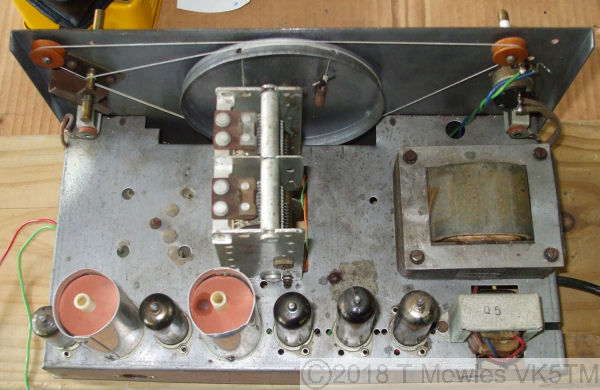
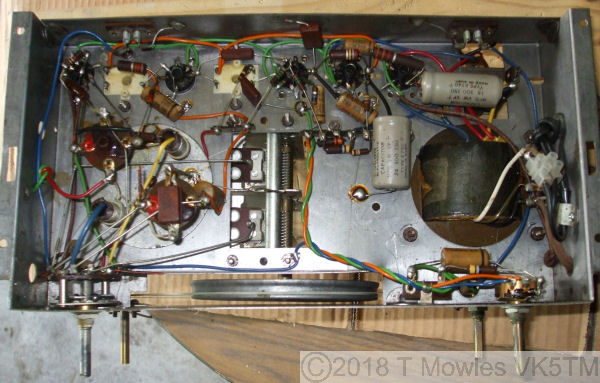
I started in electronics, way back in the dark ages in the UK, at a very young age and I can blame it all on my grandfather. While staying with my grandparents on holidays and various other times, they used to religiously listen to a radio series called the "Archers". To keep me quiet during the broadcast, they would put me in the cupboard under the stairs (no, it wasn't punishment or abuse), where there was this wonderous world of strange bits and pieces I could play with. This was back in the Fifties (1950's, that is) and I quickly found out these were old radio bits and pieces. Anyway, moving on a bit, I was given one of those Philips kits that made up various electronic gizmo's. From there, I joined a ham radio club and built my first transmitter, a valve (tube to those in the US) 2m AM rig at age 13. (You can hear the outcry now if you let a person of such young age play with all those nasty, dangerous high voltages these days. The nanny brigade have a lot to answer for). Which brings us to the present. For a bit of nostalgia, I thought I might like to build another copy of that old 2m rig. But where to get those harder to find parts without spending a small fortune? As luck would have it, a flyer appeared in our mailbox, advertising a clearance sale and in among the items were - old valve radio's. To cut it short, I ended up with 8 valve radio chassis, all complete, for the princely sum of $6 and I suspect all but two are in working order. Here are some pic's of a couple, to give an idea of what condition they were in. These first two pic's are from a Precedent 5 valve radio/gramophone chassis. The Precedent was the inexpensive brand of the day, with things like the IF cans being pop rivetted around the coils. Also, notice, in the first pic, the two outside pulleys that the dial cord runs over, they are made of wood. An idea for that next project perhaps? In the second pic, the circular plate that came from where the mains transformer is mounted was used to mount the tuning coils. Despite this, whoever built this particular one took great care in wiring it. Look at how straight the bare wire is and with precise bends. The overall wiring and assembly is very neat.
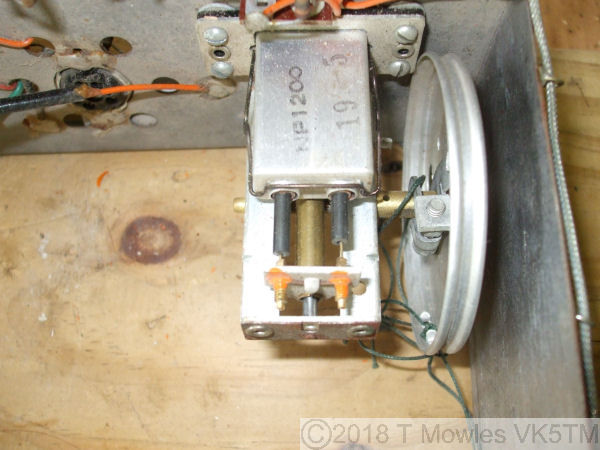
These next three pic's are from a chassis, brand unknown, that shows the best use of chassis space. In the first two pic's, both sides of the chassis have been used to mount valves and components. While the third pic shows the variable inductance tuning unit, rather than a varaible cap. That unit still has a nice smooth action.
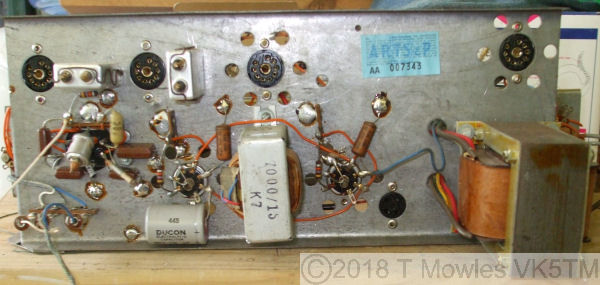
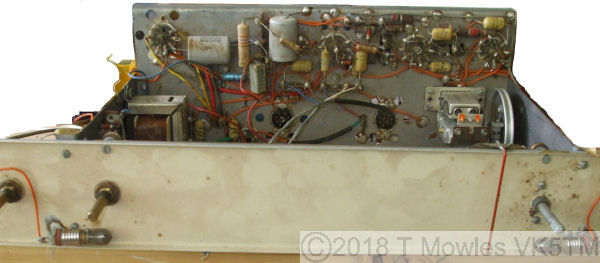
The blue sticker with "ARTS & P" on it is a royalty sticker. Most radio builders in Australia of the time, formed an alliance to make use of patents and protect themselves. The Australian Radio Historical Society and many other sites can provide information, if you want to know more. These and all but one of the others have been dismantled and the parts (excluding resistors and caps) have been kept. Three of them had dial scales which are available for sale of which I will get some pic's and put here shortly.
